Skip to content

CDL Tribal Justice

Promoting Public Safety Through Education

National Judicial College Logo
  • Tribal Courts and SDLA’s
  • Broadcast Library
  • News
  • Benchcard
  • Human Trafficking Resources
  • White Papers
  • Education
  • Other Resources
  • Tribal Courts and SDLA’s
  • Broadcast Library
  • News
  • Benchcard
  • Human Trafficking Resources
  • White Papers
  • Education
  • Other Resources

Human Trafficking Resources

Timeline of Federal Laws Impacting American Indian Human Trafficking

1994
2000
2005
2010
2022
1994

Violent Crime Control and Law Enforcement Act of 1994

Congress enacted the Violence Against Women Act (VAWA) as part of the Violent Crime Control and Law Enforcement Act of 1994 (Public Law 103-322). VAWA created stronger federal protections for victims of domestic violence, sexual assault, and stalking, while also expanding support for Tribal communities and victim services.

2000

Victims of Trafficking and Violence Protection Act of 2000

Congress reauthorized and expanded VAWA in 2000 through the Victims of Trafficking and Violence Protection Act of 2000 (Public Law 106-386). This law strengthened protections for victims of violence and included the first federal Trafficking Victims Protection Act (TVPA), creating a stronger legal framework to address human trafficking nationwide.

2005

Violence Against Women and Department of Justice Reauthorization Act of 2005

The 2005 reauthorization of VAWA expanded protections for Native women, strengthened enforcement of interstate domestic violence laws, increased funding for shelters, training, and victim services, and reinforced full faith and credit for Tribal court protection orders.

2010

Tribal Law and Order Act of 2010

The Tribal Law and Order Act of 2010 strengthened Tribal justice systems by improving law enforcement coordination, increasing sentencing authority for Tribal courts, enhancing criminal data sharing, and addressing violent crime, domestic violence, and sexual assault in Indian Country. It also improved accountability and reporting related to crimes impacting Native communities.

2022

Violence Against Women Act Reauthorization Act of 2022

Congress reauthorized VAWA in 2022 through the Violence Against Women Act Reauthorization Act of 2022. This expansion restored and strengthened Tribal Special Criminal Jurisdiction, allowing Tribal courts to prosecute certain non-Native offenders for crimes including sexual assault, child violence, stalking, domestic violence, and sex trafficking committed in Indian Country.

Victims of Trafficking and Violence Protection Act of 2000

The is a significant U.S. law aimed at combating human trafficking and providing protection for victims. It primarily focuses on addressing the global and domestic issues of human trafficking, especially women and children who are trafficked for forced labor or the sex trade.
Full Text of the Law

Organizational Resources

StrongHearts Native Helpline

StrongHearts Native Helpline provides confidential, culturally appropriate support for Native American and Alaska Native individuals experiencing domestic violence, dating violence, sexual violence, and human trafficking. Available 24/7, the helpline offers advocacy, safety planning, peer support, and connections to local resources for survivors and their families. As a Native-centered service, StrongHearts recognizes the unique challenges facing Tribal communities and works to provide support grounded in culture, respect, and healing.

If you or someone you know needs help, call 1-844-7NATIVE (1-844-762-8483).

Click here to learn more.

Missing and Murdered Indigenous Women (MMIW)

The Missing and Murdered Indigenous Women (MMIW) movement raises awareness of the disproportionate violence experienced by Indigenous women, girls, and Two-Spirit people across Tribal communities. This ongoing crisis highlights the urgent need for stronger reporting, accountability, and justice. Understanding MMIW is essential to protecting Native families, preserving Tribal sovereignty, and supporting safer communities throughout Indian Country. Learn more and access additional resources through Native Women’s Wilderness and their MMIW initiative: MMIW Resource Page

TAT

TAT, formally known as Truckers Against Trafficking, is a nonprofit organization dedicated to educating, equipping, and empowering members of the transportation industry—especially commercial drivers—to recognize and report human trafficking. Through training programs, outreach events, and partnerships with law enforcement and industry leaders, TAT helps turn truck stops, highways, and rest areas into critical points of intervention. Their work has supported victim recovery, assisted trafficking investigations, and strengthened nationwide efforts to combat human trafficking.

Click here to learn more.

Additional Resources

Lifetime CDL Disqualification for a Conviction of Human Trafficking in a CMV Primer

The Human Trafficking Primer emphasizes that enforcing lifetime CDL disqualification for convictions involving severe forms of human trafficking protects victims, strengthens public safety, and preserves the integrity of the transportation system. For Tribal communities and courts, proper reporting and enforcement also support safer roadways, protect vulnerable populations on reservations, and strengthen accountability across Indian Country. Funded by the Federal Motor Carrier Safety Administration (FMCSA), this collaborative effort brings together The National Judicial College (NJC), the National Center for State Courts (NCSC), the National District Attorneys Association (NDAA), the American Association of Motor Vehicle Administrators (AAMVA), and the Commercial Vehicle Safety Alliance (CVSA). The primer provides practical guidance to help ensure offenders are properly identified, reported, sanctioned, and permanently removed from operating CMVs.

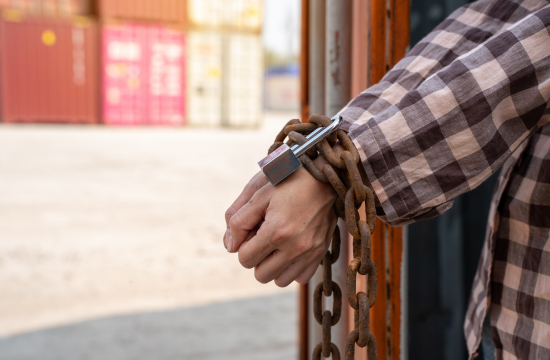
Traffic Jam: How Commercial Drivers Impact Human Trafficking

This webcast examines the critical connection between human trafficking and commercial transportation, with a focus on both labor and sex trafficking in Indian Country and Tribal communities. Through the lens of judicial leadership, participants will explore how commercial motor vehicle (CMV) drivers and the transportation industry can both contribute to and help prevent trafficking crimes.

The No Human Trafficking on Our Roads Act highlights the important role courts play in addressing trafficking offenses involving CDL holders and commercial transportation. This session provides foundational knowledge of trafficking indicators, relevant federal and Tribal legal considerations, and the real-world impact trafficking has on Tribal lands, reservations, and surrounding communities.

Participants will gain tools to recognize warning signs, challenge common misconceptions, and support informed judicial responses that strengthen public safety and accountability.

This course is sponsored by the Federal Motor Carrier Safety Administration.

U.S. Advisory Council on Human Trafficking

The 2024 Report of the U.S. Advisory Council on Human Trafficking highlights survivor-led recommendations for strengthening the national response to human trafficking while emphasizing the important role transportation systems play in both trafficking activity and prevention. Commercial motor vehicles (CMVs), highways, truck stops, and travel corridors are often used by traffickers to move victims across jurisdictions, making awareness within the transportation industry critical.

For Tribal courts and judges, understanding the connection between human trafficking and CMV activity supports better identification of trafficking indicators during criminal proceedings, CDL-related cases, and roadside enforcement matters. The report encourages trauma-informed practices, stronger collaboration between law enforcement and community partners, and culturally responsive services for Tribal communities. Preventing trafficking requires both accountability and awareness—especially in spaces where transportation and public safety intersect.

Click here to read the full report.

human trafficking

explore

Home

  • Tribal Courts and SDLA’s
  • Broadcast Library
  • News
  • Benchcard
  • Human Trafficking Resources
  • White Papers
  • Education
  • Other Resources
  • Tribal Courts and SDLA’s
  • Broadcast Library
  • News
  • Benchcard
  • Human Trafficking Resources
  • White Papers
  • Education
  • Other Resources

about njc

The National Judicial College (NJC) has worked with the Federal Motor Carrier Safety Administration (FMCSA) to reduce crashes, injuries, and fatalities involving large trucks and buses​ for 20 years​. The College has held CDL-related courses for thousands of attendees​ from all states.​​

disclaimer

This material is based upon work supported by the Federal Motor Carrier Safety Administration (FMCSA) under Grant No. FM-CDL-0322-18-01-00. The FMCSA is a component of the United States Department of Transportation. Any opinions, findings, and conclusions, or recommendations expressed in this publication are those of the authors, and they do not necessarily reflect the view of the FMCSA and/or the U.S. Department of Transportation.

Follow us
Facebook Twitter Youtube Linkedin

© 2026 The National Judicial College. All rights reserved.